
Navigating the Intersections of Mathematics and Machine Learning
Author:Nicole Pyzyk
Date:Jun 12, 2026
At its core, data science is a multifaceted field that combines statistical analysis, machine learning, and data engineering to extract meaningful insights. It lies at the crossroads where mathematics meets computer programming, and it aims to tackle complex problems by transforming raw data into interpretable information. These foundations allow data scientists to harness the power of algorithms and computational models to generate predictions and drive data-driven decision-making.

Get your free guide on mastering data science fundamentals and applications.
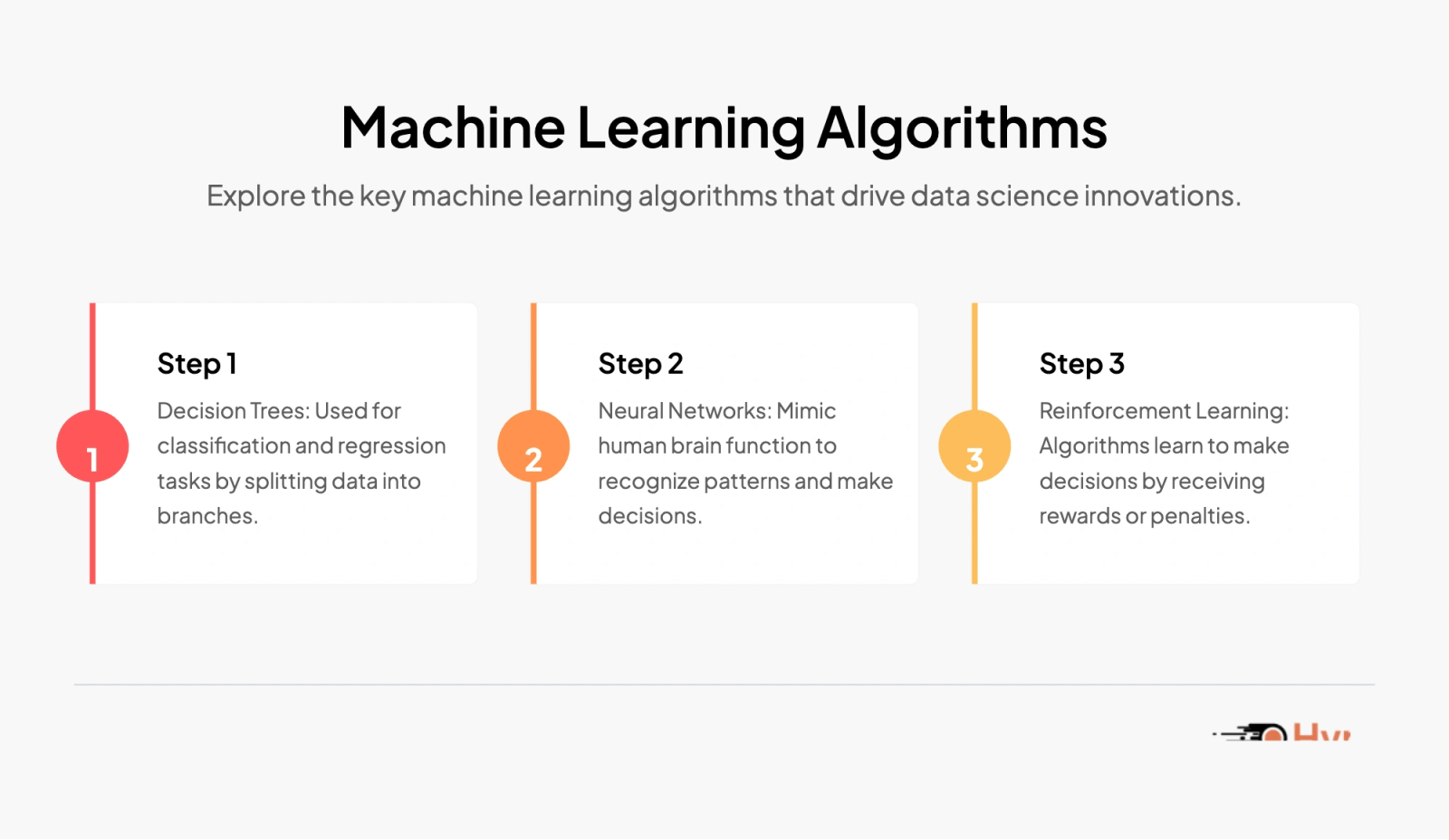
Machine learning is one of the critical components of data science that enables computers to learn from data patterns without being explicitly programmed. This subfield of artificial intelligence focuses on developing algorithms that can improve automatically through experience. Machine learning has revolutionized industries by allowing for real-time data analysis, personalized recommendations, and sophisticated pattern recognition, thereby enhancing the predictive power of data science initiatives. Algorithms such as decision trees, neural networks, and reinforcement learning form the backbone of most machine learning applications.
The practical applications of machine learning in data science span numerous industries. In healthcare, machine learning models help predict patient outcomes and personalize treatment plans. In finance, they assist in detecting fraudulent activities and managing risk. Retailers leverage customer data to improve inventory management and enhance consumer experiences. The versatility of machine learning within data science ensures that it will continue to be a driving force in innovation across sectors.
In which industry do you believe machine learning is creating the most significant impact?
Data science is a field that combines statistical analysis, machine learning, and data engineering to extract insights from data.
Machine learning enables the creation of models that can learn from data, improving predictions and decision-making.
Mathematics provides the foundational algorithms and models needed to analyze data accurately.
Machine learning is used in healthcare for predicting outcomes, in finance for fraud detection, and in retail for inventory management.
The future of data science involves more advanced tools and greater integration into decision-making processes across industries.
Mathematics is the backbone of data science, underpinning many algorithms and models that define the field. Linear algebra, calculus, and probability theory are just a few of the mathematical disciplines that are fundamentally important to data analysis. Understanding these concepts is crucial for creating models that can accurately interpret data patterns and make forecasts. Beyond the calculations, mathematics allows data scientists to validate models, ensure consistency, and derive meaningful insight from data sets.
As technology and data continue to grow exponentially, the future of data science promises even more advanced tools and methodologies. With improvements in machine learning techniques and computational power, data science will likely play an increasingly vital role in decision-making processes. Industries must adapt continually, embracing new technologies and prioritizing data literacy to capitalize on the potential growth opportunities that data science presents. In this evolving landscape, a deep understanding of both the mathematical foundations and practical applications of data science will be paramount for success.
Subscribe to Our Newsletter
Stay up to date with our latest news and updates.
Join our readers
No spam. Unsubscribe anytime.